
Read Transcript
Are the teenage years really that bad?
Annalise:If we understand what's going on for our teens a little bit more Mhmm. It it can be easier. Sometimes they're doing big adult things and wanting this independence or having big emotions. Yeah. And then at other times, they're kind of like little kids again, like needing help.
Annalise:How do I get gas? You've shown me a few times, but I need you to show me again.
Suzanne:It's how we look at them matters too and that understanding component that you were mentioning.
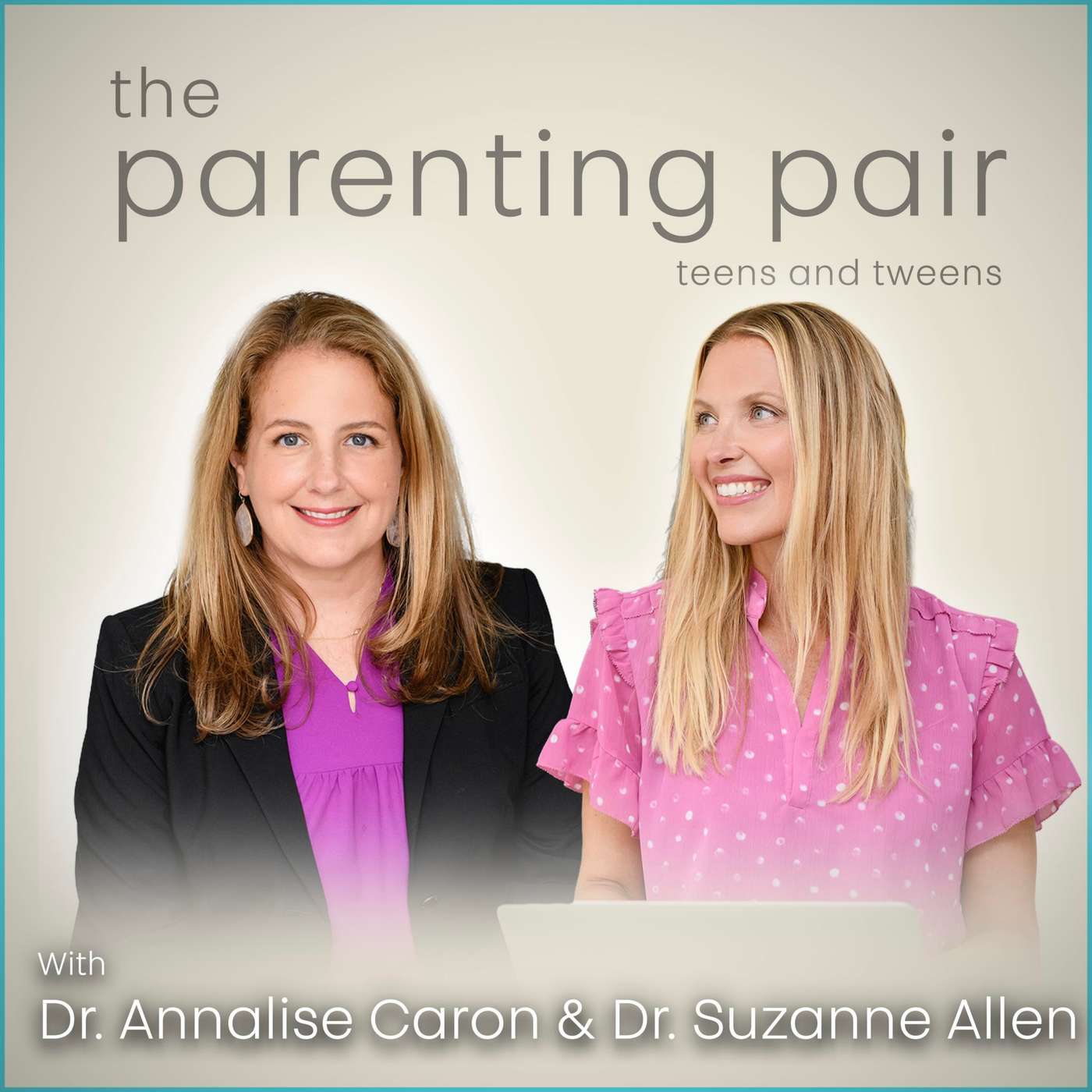
Annalise:Well, hello everyone. Welcome to the inaugural edition of the Parenting Pair Podcast. My name is Doctor Annalise Caron.
Suzanne:And I'm Doctor Suzanne Allen.
Annalise:And we are two child and adolescent clinical psychologists who have been working together for many years. We run a practice together and have a real, real interest and love of kind of the tween and teen years. And through the pandemic, we got a lot of extra reach outs, not only from our own clients, but from people in the community and people we knew with different sorts of parenting questions because of all the shifts that were happening during that time and since. And that we've always loved working with parents. I think during that time, we leaned into it so much that we started to chew on some of these ideas that we're going to share on the podcast.
Suzanne:So Yep. So we will be here together. At times, we will invite guests or other people who may have valuable insight to offer, and we will be trying to answer your questions and provide really good information, sound science backed information, and hopefully shorter snippets of time so that on your drive to work or while folding a load of laundry, you might be able to get some really great actionable things to take away into the rest of your week.
Annalise:Yeah. Because we know that you're busy and we're busy too. So we're hoping to keep these shorter, but really helpful.
Suzanne:Yep. Alright. So let's dive in. Let's do. So With our first question here, we wanted to start with, are the teenage years really that bad?
Annalise:It's a good question. It's it's a very
Suzanne:good question. Sometimes it feels like it. Sometimes it feels like it.
Annalise:Well, it's because you're in an entirely different universe than you've been in in other times. And I think there's this sort of zeitgeist that the teen years are, you know, parenting teenagers is so very difficult. And though at times it really can be, it can be really challenging. Mhmm. I think you and I both believe that if we understand what's going on for our teens a little bit more Mhmm.
Annalise:It it can be easier. You were telling me just the other day about about when you had your first son. Day one of motherhood. Which we all remember what that's like. Right?
Suzanne:Yeah. Yeah. And in those days, there was a lot less social media, so there was a lot less information. So I was very ill prepared for, day one of motherhood and and all of those changes that your body was going through. And I remember being in the hospital and I had lovely nurses that were were trying to help with, you know, many difficult tasks on day one.
Suzanne:And one of the things that at least two, if not three nurses said to me as they came in, they were trying to help me is, oh, this is hard. This is tricky, but you're gonna get this. Don't worry. Once you get to the teen years, oh my gosh. Like, that's a totally different ballgame.
Suzanne:So, like, this is fine now. It's going to get a lot worse. So be happy here in this moment.
Annalise:I've just gotta say day one, like, just about nothing was fine. I mean, the baby, that was the exciting part. Yeah. But you know, you're feeling exhausted, you're feeling worn out, you're feeling lots of things. Right?
Suzanne:A lot of things in a lot So you've got message.
Annalise:I think there is that cultural idea that the teen years are just so difficult, teens are so difficult. Yeah.
Suzanne:Little kids, little problems, big kids, big problems is what people kind of continuously tell you along the way. And I think in some ways, right, they're they're maybe hopefully trying to give you a little bit of perspective, little hope, like when kids are little, like, oh, they're not sleeping, don't worry about it. Like, it's gonna get better, you know, that part will get better. Like, you can manage this. So I think it's meant to instill some confidence, but there's this ominous warning that's at the end of it of big kids, big problems.
Suzanne:And so you'd better watch out and be prepared because not only are they gonna be dangerous, like, they they are going to be wild and and out of control, but they're also vulnerable. Yep. And so what a combo. And you could mess it up if
Annalise:you're not watching And they could mess up their whole lives. Mhmm. They could mess up their whole lives. So there is this real tension and anxiety about it and when people get anxious, when parents get anxious, we tend to go to control. Like, I've got to fix this.
Annalise:This is a problem. You know, and sometimes it's really really not. You know? Yeah. And that's a really good point.
Annalise:You know, little kids, little problems, big kids, big problems. There's a lot of similarity between when they're really young, if we think of like infancy and toddlerhood versus adolescence. Because during adolescence, it's the time of the biggest brain sort of reorganization that happens since infancy and toddlerhood. Right? And when they're when they're little and they're babies and they're getting dysregulated or having a tantrum, we have this sense of like comfort and soothing of them like, oh, we know what's going on and we let them do it and we're not worried by it because we know it's normative.
Suzanne:And It's a little tiny one throwing a block. Like we may not But it's they're they're little small bodies doing little things.
Annalise:It's not a six foot seventeen year old man Mhmm. Throwing a fit. That looks really different. So it feels maybe even scary sometimes, right? But actually, it's completely developmentally normal.
Annalise:Right? Because of that brain reorganization and it's confusing for parents, right? Because sometimes they're doing big adult things and wanting this independence or having big emotions. Yeah. And then at other times, they're kinda like little kids again, like needing help.
Annalise:Like, how do I get gas? You've shown me a few times but I need you to show me again. Or wait, Where can I buy some hangers? Right? Like like they they need that help.
Annalise:Yeah. You
Suzanne:know? Or can you hang up my clothes for me? Please. Because I'm so tired.
Annalise:See if they asked. That would really be lovely, Suzanne. That would
Suzanne:Well, that's not asking if just the clothes are all over the floor. That's not an ask?
Annalise:No. That's just your brain. And hyper power there. Yeah. Doing it doing it for them.
Annalise:Well and I
Suzanne:think, right, you know, it it's how we look at them matters too in that understanding component that you were mentioning because take for example, it's a it's a great example about, you know, big kids kind of throwing tantrums or getting really upset about something. When we look at them as, you know, dangerous or out of control or, oh gosh, they're really upset, and they have the keys to the car and now they're driving. Right? It appears really scary. They appear scary and we feel like we've we've gotta stop it.
Annalise:Do something.
Suzanne:Yep. And now, let's be clear. Often, we we do have to help or support them in ways or set some limits and boundaries to help keep them safe. So that doesn't go away during the teenage years. Just like we wouldn't let a little child, you know, throw blocks at another child, we would stop them from hurting them.
Suzanne:We we would stop our young person or or try to stop them before they would hurt themselves or someone else. But when we understand that something like a big display of emotions is actually really developmentally appropriate and not just that, but helpful and something that they need to do. Right? Because if we think about teens are going out into the world more without us. Mhmm.
Suzanne:They have to make decisions. They have to kind of suss things out and figure things out. Like, is this person safe? Like, do I like the way this person's treating me? How does that building look?
Suzanne:Should I go in there? Right. So it is actually helpful for them to have kind of those bigger emotional reactions that are giving them signs and cues of like, I don't know about that. I I don't know about that. And so when we look at it that way, right, we might actually I mean, maybe not in the moment, but we might actually appreciate some of those reactions and see that as like, wow, they're really growing into this person that's going to have good kind of flags that go up out in the world.
Suzanne:Yeah. And good and good inner dialogue and insight into what they like and what they don't like. What feels comfortable and uncomfortable.
Annalise:And that's what, you know, our toddlers are doing when they're saying, no, I really don't like this show or no, I really don't like going to bed. Mhmm. But something we you're so right. They're getting those cues. There are so many cues when your brains are changing that quickly.
Annalise:Mhmm. So with toddlers, you know, I I certainly remember with one of my children, you know, he just needed to eat. Right? He he would be dysregulated but if we got food in him, he did much better.
Suzanne:Right? Understand that.
Annalise:Yep. You know? Yep. You actually kind of relate to. But, you know or, you know, another one of my kids really would just be exhausted from all of the learning, learning to walk, learning to deal with other toddlers, learning to manage preschool, it's a lot on them their brain and those It's the same thing for teenagers.
Annalise:They go through growth spurts. They have more responsibilities. We expect more of them. Right? They they want this autonomy, so they're pushing at the edges and having these big emotions.
Annalise:Mhmm. But we also they're getting, you know, much more schoolwork or more they have to have a part time job. Whatever these new requirements are Mhmm. Are really exhausting. And when your body's changing that much, sometimes those big emotional outbursts are just exhaustion.
Annalise:And though we get that with our toddlers, it's really hard to remember when it's, you know, an adult kind of staring back at us. But it's important to have that perspective because if you can think that way in the moment like, oh, she just really needs some downtime. Right? Like this has been a lot, you know, for her. He just needs to take a break or chill out for thirty minutes on video games to kind of almost recenter.
Annalise:Mhmm. As odd as that may sound to those of you worried about video games, we will get to that in a future episode. Yep. Sometimes it's the same for our big kids as for our little. And if you can see that, it it helps us be a little bit calmer in our parenting.
Annalise:Mhmm. You know?
Suzanne:And and I think, know, an added component too for us as parents, and and there's been a lot of discussion about this, you know, recently about the level of parent burnout and stress. And I think, you know, that that's a much bigger topic in terms of all of the things that contribute to it. But I do think one of, you know, the components here is parental responsibility and, you know, all that we have to manage and all of our fears and worries for our kids. And so if there are ways that we can view some of those behaviors kind of developmentally Mhmm. And even at times, you know, positively and see the the positive kind of growth and changes that are happening, it's likely for us to be able to then interact with them a little bit differently with probably a little bit more compassion and understanding, which then will improve some of our communication and relationship with them, and to also have a greater understanding of the why or some of the things we might see, which may lead to us feeling less like we have to stop or control it.
Suzanne:Again, appropriate limit setting. Right? But less that we have to stop and control it, which will likely reduce our burnout along the way. Absolutely. And so it's not just, you know, it's nice to understand our kids, like, it's actually good for them in their development and and the things they need to do during the teenage years, but it's also good for us and our burnout.
Suzanne:So you're saying the moodiness,
Annalise:the anger, the not doing the thing that maybe I want them to do actually is good for us? Okay.
Suzanne:When we can view it within that developmental lens or frame, when we can put that frame around it and we're like, well, why is this happening or what's contributing to this? Right? So if my teen goes upstairs after school and, you know, has his or her music on and they're kind of blasting it and they they wanna be kind of left alone, if I see that within the, wow, they've just had a whole day at school and they're navigating all these new experiences and different dynamics with teachers
Annalise:That that we don't know about. Don't know about. Don't know about. And a lot of the time we shouldn't know about, by the way. Yeah.
Annalise:Yeah.
Suzanne:And it's the teachers and the adults and the coaches and the acting person Mhmm. And then the social stuff and how do I fit in, but how do I stand out or how do I you know, all of those things.
Annalise:All of those things.
Suzanne:That if we can see, you know, that coming home sometimes and needing to veg out whether it's the way we would or not. Right? At this age, I like silence. Like, there is so much chaos and noise that's built over the years that sometimes I drive around with nothing on in my car. That is not what a lot of teen a lot of teenagers Right.
Suzanne:Like loud music. Right? When we can view that as, okay, this is a way that they have been spending the whole day kind of navigating the world and learning and growing and, you know, and now they need that time to kind of decompress and let some of that consolidate and and maybe just chill a little bit versus they're isolating or they're blocking me out or they won't tell me anything anymore.
Annalise:And that was what I was just gonna say. Those thoughts you just had, those three that you listed out are really jumping to conclusions. We do that a lot. And we jump to conclusions as parents and it makes us very overwhelmed, very stressed out, feeling like we have to do something. And sometimes, as you said with regard to parental parental, we don't have to do something.
Annalise:We have to allow them the space to do all that their brains and bodies are doing. I do want to just highlight because you and I have a sincere and significant affinity for this age group. We just love working with tweens and teens and their families and younger children and college students. We like it all, but there is something really unique about this time so we get excited about it. But we also work with a lot of mental health concerns.
Annalise:So we're talking about normative developmental things that happen in adolescence, but it can be really confusing for parents because sometimes that isolation is more. It's more of a depression, right? Or sometimes that playing video games after school is a sign of something else. Right? Yeah.
Annalise:And so we are also in this podcast going to address a lot of those mental health concerns that come up, how parents can think about them when parents need to do something or not need to do something. So in no way by our quick discussion today about trying to shift a lens on how we look at some of our teens' behaviors are we trying to say that if in your true gut you're seeing a change in behavior or there's significant withdrawal or significant acting out or you know, that that isn't something to attend to and we'll talk more about that in future episodes. Because I think that is another thing that causes a lot of parental worry, especially all the headlines post pandemic around, you know, even before the pandemic, you know, mental health concerns were increasing Mhmm. In teens. But I think that's, you know, something I just, you know, want to acknowledge and we will be really delving into in future episodes.
Annalise:Think in one a few episodes down, we're going to talk about, you know, what do I do if my teen is thinking about killing themselves, if my teen's thinking about dying. Mhmm. And so we will handle all of the nitty gritty of some really complex topics because humans are complex, and so we don't wanna minimize those things. Mhmm. But just, you know, if if we think about where we are, you know, right now, you know, at at the start of this podcast, we just wanna put out there a lot's going on.
Annalise:Our teams are changing, and at this time their push is going to be for more independence and more autonomy. And sometimes how that push looks, which is totally normal and appropriate, but sometimes how that push looks feels scary or overwhelming to us, and it really shouldn't. So we're hoping to shift the lens on that. Mhmm. Yeah.
Annalise:So what do you think? Is there anything else we need to share in this inaugural episode?
Suzanne:Well, I think kind of what now? What next?
Annalise:What would
Suzanne:you want Terrence to kind of take away?
Annalise:I love that. You know what, Suzanne? I think we should do that at the end of each podcast. Okay. I think we should say what now?
Annalise:What now? So what now, Suzanne? I think right now, in the next week, if we can just make an effort, and I'm going to do this myself because by the way, as moms, we're both moms here
Suzanne:as Teens and tweens.
Annalise:Of teens and tweens. So we're in it. We're totally in it. When those things come up, you know, the moody reactions, the eye rolls, which we'll have a whole episode on, But when things bring up fear in us, to check-in, could this be something else? Sort of try to be a little bit curious and maybe offer kind of the possibility that it could just be exhaustion or brain changes or normal pushes for independence.
Suzanne:Mhmm. I love that. And we would love to hear from you. So if there are questions or things you would like us to discuss or address, please, please email us at hellotheparentingcare dot com. We'd love to hear from you.
Suzanne:100%.
Annalise:And now a quick word from our lawyers. The Parenting Pair Podcast is designed for informational and educational purposes only. Do not rely on the information presented in this podcast as a substitute or replacement for professional psychological or medical advice, diagnosis, or treatment. If you have concerns about you or a family member's well-being, please contact a licensed mental health professional or physician.
In this inaugural episode, Dr. Annalise Caron and Dr. Suzanne Allen—both child and adolescent clinical psychologists—take a fresh look at adolescence. They challenge the cultural narrative that the teen years are inherently difficult and reframe it through a compassionate, developmentally informed lens. With personal anecdotes, clinical wisdom, and a touch of humor, the hosts set the tone for what’s to come: practical, science-backed parenting insights for raising tweens and teens.
In this episode, they will discuss:
- How fear or worry can lead parents to jump to unhelpful conclusions about their teens
- Why understanding adolescent development helps parents stay more regulated
- Viewing teenagers through a developmental lens to help support their growth
- How knowledge can reduce parenting burnout and lead to more grounded, intentional responses
- How to respond to our fears as parents with curiosity and fewer overreactions
If you found this episode helpful, please like, subscribe, and share it with someone who could benefit from this conversation.
🎙️ Hosted by Clinical Psychologists Annalise Caron and Suzanne Allen.
🔔 New episodes every Wednesday — subscribe so you never miss one.
✉️ Newsletter: https://drscaronandallen.com
📱 Instagram: @theparentingpair
💬 Questions or topic suggestions: hello@theparentingpair.com
DISCLAIMER: The Parenting Pair Podcast is designed for informational and educational purposes only. Do not rely
on the information presented in this podcast as as a substitute or replacement for professional -- psychological or medical -- advice, diagnosis, or treatment. If you have concerns about you or a family member's well being, please contact a licensed mental health professional or physician.
Episode Keywords
Recent Episodes
The Manosphere is in Your Son’s Feed. Here’s How to Talk About It

What to Do When Your Teen Makes a Big Mistake | Michelle Icard
What Happens When the "Right" Parenting Advice is Wrong for Your Child or Teen?
How to Prepare Kids for an Uncertain Future (and AI) | Jeanine Collins
Should You Let Your Teen Drink at Home? What the Research Says
When One Child Needs More: Supporting Siblings of Kids With Mental Health Challenges

Puberty to Perimenopause: Early Puberty, Teen Nutrition & HRT | Dr. Sophia Yen

Is It Safe to Skip Your Period? Birth Control & Cancer Risk | Dr. Sophia Yen

Is 13 Too Young for Social Media? What Parents Need to Know About the Teen Brain | Dr. Eva Telzer

AI, Teens & Relationships: What Parents Need to Know | Dr. Mitch Prinstein

Medical Trauma in Parents: Caring for Yourself So You Can Care for Your Child | Dr. Meghan Marsac

Back-to-School Parenting: Why Connection Matters More Than Getting Everything Done

Medical Anxiety in Kids & Teens: How to Help Them Cope | Pediatric Medical Trauma
How to Raise a Teen Who Makes Good Decisions (Even When You're Not Watching)
Sexual Assault Awareness: College Red Zone Conversation Guide for Parents and Teens
I Yelled at My Teen. Now What? How to Repair Your Relationship

Raising Confident, Independent Kids With Food Allergies | Tamara Hubbard

Say Less: The Parenting Strategy That Gets Teens to Listen
Why Making Friends Is Harder Than It Looks (And How to Help Your Teen) | Deirdre Flores

Stop Spiraling: How to Catch the Thoughts That Stress You Out as a Parent

Screens All Summer? How to Avoid Constant Fights With Your Tween or Teen
The Real College Conversation: What Every Parent Needs to Know Before (and After) Freshman Year

Why Women Struggle With Sleep: From Adolescence to Menopause | Dr. Shelby Harris
Why Your Teen Is Always Late: Time Blindness, ADHD, and What Helps
Why Teen Breakups Feel So Intense — And How Parents Can Help
How to Support a Grieving Teen or Child | Parenting Through Loss
Parenting Through Tattoos, Piercings & Teen Identity Changes
Why Your Teen Won't Open Up (And What Actually Helps)
When Your Teen Becomes Physically Aggressive: What Parents Need to Know and Do
Breaking the Cycle of Parenting Anxiety: How to Raise Resilient Kids Without Reinforcing Avoidance
What To Do If Your Teen’s Friend Is Self-Harming | A Parent’s Guide
Emotional Validation: What It Really Is (And What It Isn’t)
Trailer — Welcome to The Parenting Pair Podcast
Cannabis: What Parents Need to Know About Teen Weed Use (Marijuana 2.0)
Is My Teen Ungrateful? How to Teach Gratitude Without Forcing It
What to Say to Your Teen After a College Rejection
When There Is No Fix: How to Support Your Child Through Suffering and Life’s Challenges
Feeling Embarrassed: What an Online Call-Out Taught Us About Teen Avoidance
You’re Not Failing — You’re Human | Letting Go of Perfection in Parenting
Sleep Struggles in Tweens and Teens: Insomnia, Nightmares and When Parents Should Seek Help
My Teen Thinks School is Pointless: How Do I Help?
Opposite Action: A DBT Tool For Big Emotions
Before You React: How to Respond When Your Teen Tells You Something Shocking
Teen Mental Health Crisis: How to Support Families When a Child Is Struggling
When Motivation Vanishes — How Parents Can Help Without Pushing
Making Sense of Our Teens' Mistakes
How To Stop Caring What Other Parents Think: 5 Mindset Shifts
A New Way to Think About ADHD For Parents of Teens and Tweens
How to Survive Holiday Family Gatherings With a Teen Who Has Anxiety, ADHD, or Depression
Stop Relying on Willpower: Tips on Teen Motivation and Behavior Change
Why Teens Lie — And How Parents Can Respond with Connection Instead of Fear
Re-release: How Online Sports Betting Hooks Teens & College Kids: What Parents Can Do about It
Why Teens Don't Sleep (and What Parents Can Do About It)
Does My Child Have OCD? What Parents Need to Know While Waiting for Answers
How Do I Stay Calm When I’m About to Lose It With My Teen or Tween? (DBT Skills for Parents)
Hormonal Health From Puberty to Perimenopause: What Every Parent and Teen Needs to Know
Should Teens Skip Their Period? What Parents Need to Know About Menstrual Suppression
Why Reassurance Can Make Teen Anxiety Worse — and What to Do Instead
To Set a Curfew… or Not? Parenting Teens and Boundaries
Why One Moment Doesn't Define Your Teen's Future: Two Psychological Concepts to Help Parents Stay Grounded and Raise Resilient Teens and Tweens
Is My Teen Depressed — Or Just a Teenager? How to Tell the Difference
Understanding & Supporting the Teen You Have- Autism & Adolescence with Dr. Lauren Turner Brown
When Life Feels Unfair: Helping Your Teen Cope with Disappointment
Talking With Teens About Sexual Assault: From High School to College
Teens' Stress Explained: Healthy vs. Unhealthy Stress (and how parents can help)
Marijuana and Teens: Facts, Myths & Conversations That Help
To Track or Not To Track? GPS Apps, Teens & Trust.
Should Parents Apologize to Their Teens? (Yes — Here's Exactly How)
3 Common Thinking Mistakes Parents Make with Teens—and What to Do Instead
Why Am I So Irritable Lately? (and my teen too)
Should I Push My Anxious Teen... or Let it Go, and Pull Back?
How to Stop Caring What Other Parents Think: 5 Mindset Shifts
The Car Ride Home After the Game — What Your Kid Actually Needs | Youth Sports Parenting
The New Game: Parenting Teens in the Age of Legal Sports Betting
Why Your Teen With ADHD Isn't Lazy or Unmotivated — Two Metaphors That Change Everything
When Parenting Feels Heavy: ADHD, Family Impact, & Self-Kindness
Should You Tell Your Teen About A Serious Medical Diagnosis?
When Teens Talk About Suicide
What is Autonomy? And Why Teens Need It.
Making Sense of Our Teens' Mistakes
